
Mono lighting (from “monochromatic”) is a solution based on the basic function of light-emitting diodes, which generate waves with a very narrow spectrum in the visible light range, corresponding to a selected color, e.g., blue. An example of this is the signaling lighting of an emergency vehicle, although in this case additional control functions are used, with a variable strobe effect to increase the visibility of the signal from a long distance.
Single-color luminaires are used in warning, signaling, inspection, decorative, architectural, and other specialized lighting applications. They often require an individual approach in terms of the optical assembly or control system.
If you are considering using monochromatic lighting in your product, it is worth noting that despite its apparent simplicity, designing a complete and optimal LED system requires a solid approach and extensive analysis.
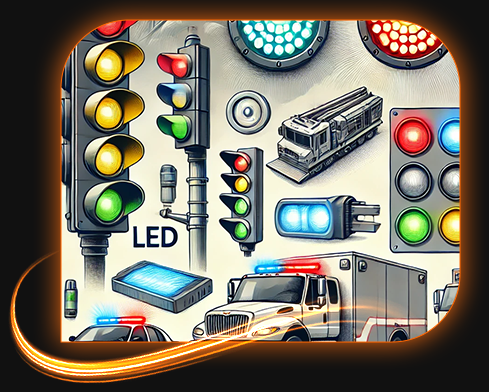
Single-color fixtures may be ideal for you if you are looking for an energy-efficient, precise, and durable lighting solution. Thanks to their efficiency, improved visibility, and contrast, single-color fixtures are perfect for signaling, warning lighting, and specialized applications such as industrial inspections. They are also aesthetically pleasing and easy to maintain, making them an attractive choice for both decorative and practical applications. If you need reliable and economical lighting, monochrome luminaires may be the right solution for you.
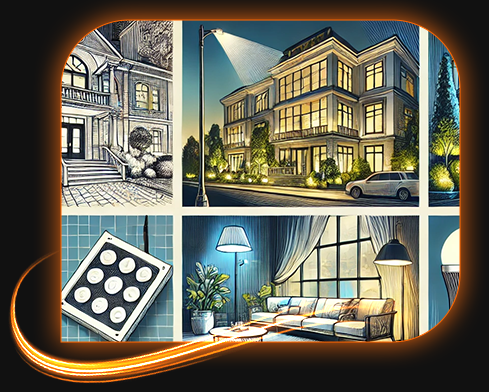
If you are unsure whether a mono lighting solution is right for you or if you have a specific application in mind, check out other options or write to us.

Light source for photocatalytic purification of water from pharmaceutical substances.
A high-temperature-resistant light source generating illumination with a specific wavelength (UV), emitting light at a useful angle of 360°, in accordance with the assumptions of the EU-funded project “Improving water quality in the Baltic Sea region (BSR) through the use of advanced purification techniques.”
Thermal analysis in terms of heat distribution, selection of light source design, selection of LED chips, design of an individual LED module powered by 24 V DC voltage, with current stabilization.
The investor wanted to create a lighting system that would enable research to be carried out in a photocatalytic reactor, where environmental conditions are demanding. The system consists of seven 1500 mm long luminaires operating in glass enclosures. The entire system is submerged in water and operates at high temperatures generated by the tested liquid and, above all, by light sources, each with a power of over 50W. To this end, we first had to analyze the installation in terms of heat management and dissipation to protect the LED chips and ensure trouble-free operation. An additional challenge was to ensure omnidirectional light distribution from the luminaire, for which we used a hexagonal luminaire body. As part of the project, we supplied light sources with wavelengths of 365 and 395 nm.
Temperature measurements taken on real light sources proved to be 4% more favorable than thermal analysis using computer simulations.
Project implemented as part of Interreg Baltic Sea Region (https://interreg-baltic.eu/about/). More about our light sources: https://interreg-baltic.eu/project-pilots/photocatalytic-system/
If you are wondering whether our services meet your needs, please use the form on the right and tell us about your idea. The initial analysis is non-binding and will allow us to quickly determine whether and how we can help you achieve your goals.
We provide a range of engineering services in the field of electronics and mechanics, focused on LED technology, at every stage of the production process. Whether you need support at all stages of the process or only at certain stages, we offer our knowledge, experience, and technological resources.